

Eating well on a Nigerian budget
13 Jul 2026 · 4 min read
When people hear "healthy eating", they picture expensive salads, imported oats and bottled supplements. Then they look at their wallet and give up. The good news is that some of the most useful foods for blood sugar, blood pressure and heart health are already in your local market, and they are not expensive.
Start with the plate, not the shopping list
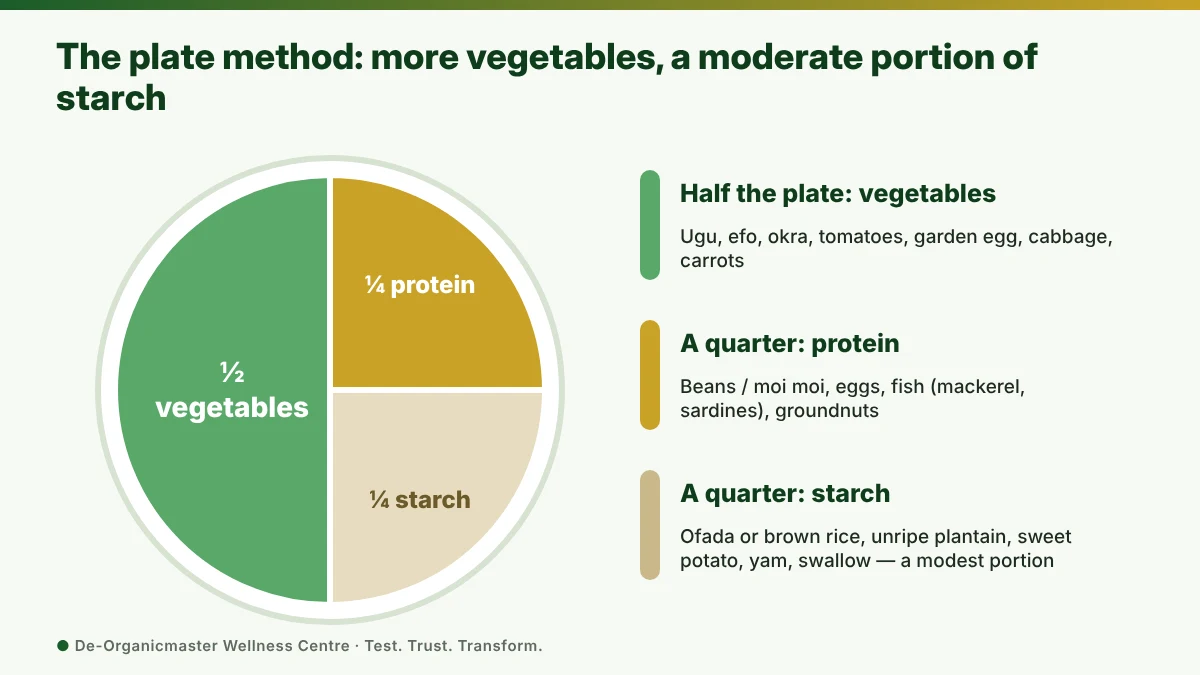
A simple plate guide works across most meals. Aim for about half the plate vegetables, about a quarter protein, and about a quarter carbohydrate such as rice, yam, or swallow. Most of us do the reverse, with a mountain of rice or garri and a small piece of everything else. Flipping the proportions improves blood sugar control without removing the foods you love.
Affordable foods that work hard for you
- Beans. Ewa, moi moi and akara (baked or less oily where possible) give protein and fibre together, which slows the rise in blood sugar.
- Green leafy vegetables. Ugu, efo, bitter leaf, spinach and waterleaf are rich in potassium, which helps balance the effect of salt on blood pressure.
- Eggs. One of the cheapest complete proteins. Boil rather than fry when you can.
- Fish. Mackerel, sardines and similar oily fish are often cheaper than beef and offer healthy fats. Choose fresh or smoked rather than heavily salted.
- Unripe plantain, sweet potato and whole grain options. These digest more slowly than white bread or large portions of white rice. Ofada rice, millet and sorghum-based meals are worth a place in your rotation.
- Groundnuts. A small handful makes a filling snack. Unsalted is best.
- Seasonal fruit and vegetables. Tomatoes, garden egg, okra, carrots, cucumber, oranges and pawpaw cost less when in season.
Where the hidden costs are
Sugary drinks, white bread with margarine, instant noodles, fried snacks and heavily seasoned meals can look cheap, but they quietly raise sugar and pressure, and the long-term cost of treating complications is far higher. Seasoning cubes in particular can be high in salt. The World Health Organization recommends adults take less than 5 grams of salt (about a level teaspoon) a day and aim for plenty of potassium from food. Using fresh onions, pepper, garlic, ginger, scent leaf, thyme and curry to build flavour lets you use fewer cubes.
Practical money-saving habits
- Buy staples in bulk from the market. Beans, rice, garri, dried fish and groundnuts keep well and cost less per portion.
- Cook once, eat twice. A large pot of vegetable soup or bean stew can cover two or three meals. Freeze portions if you can.
- Shop with a short list. Plan four or five dinners, then buy for them.
- Swap, don't just remove. Replace one sugary drink a day with water or zobo made with little or no added sugar.
- Add vegetables to what you already cook. A handful of ugu or spinach in jollof, stew or beans is cheap and effective.
- Watch your portions of swallow and rice. Use a smaller plate and serve the vegetables first.
A sample day
| Meal | Idea |
|---|---|
| Morning | Boiled eggs with unripe plantain and tomatoes, or pap made without much sugar with moi moi |
| Afternoon | Beans or ofada rice with vegetable stew and a piece of fish |
| Snack | Groundnuts, an orange, or garden egg with a little pepper sauce |
| Evening | Efo riro or okra soup with a modest portion of swallow |
A word on medicines and special diets
If you have diabetes, kidney disease or are on blood pressure medicines, speak with your doctor or a registered dietitian before making big changes, because some conditions need individual adjustments, especially around potassium, portion sizes and the timing of meals relative to your medicines. Food supports treatment. It does not replace it.
For the bigger picture of how food, sugar and blood pressure are linked, read why one number rarely tells the whole story in diabetes and what your blood pressure readings are telling you.
Frequently asked questions
Is rice bad for blood sugar?
Rice is a starch that raises blood sugar, so portion size matters more than banning it. Fill half the plate with vegetables, keep rice to about a quarter, and pair it with beans or fish.
What cheap foods are good for blood pressure?
Leafy vegetables, beans, tomatoes, fruit and unsalted groundnuts provide potassium and fibre. Cutting back on seasoning cubes, salted fish and instant noodles helps lower salt intake.
Do I need supplements to eat healthily?
Most people do not need supplements to start. Build the plate first. Ask your doctor before taking any supplement, especially if you take regular medicines.
This article is educational and does not replace advice from your doctor. Please do not stop or change any prescribed medicine without speaking to the person who prescribed it.