

Blood pressure: what your readings are actually telling you
13 Jul 2026 · 4 min read
"Your pressure is a bit high." Many of us hear this sentence in a hurried clinic visit and leave not knowing whether to worry. Blood pressure is one of the most useful numbers in health and one of the least explained. Let us fix that.
The two numbers, in plain words
A reading such as 130/85 mmHg has two parts. The top number, systolic, is the pressure in your arteries when the heart squeezes. The bottom number, diastolic, is the pressure between beats, when the heart rests. Both matter. In people over about 50, the top number is often the more important one to watch.
What the categories mean
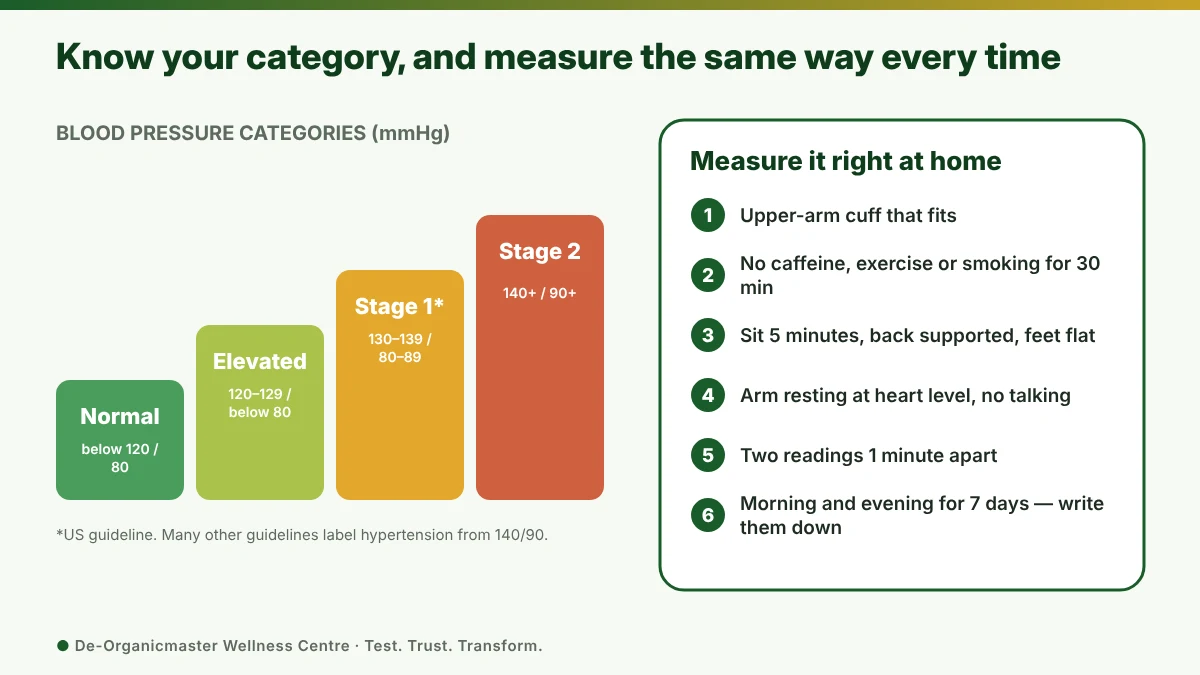
Guidelines differ slightly between countries, which is why you may hear different thresholds from different doctors. The commonly used American guideline groups readings like this, while many other guidelines, including European and WHO-aligned ones, label hypertension from 140/90:
| Category | Systolic | Diastolic |
|---|---|---|
| Normal | below 120 | and below 80 |
| Elevated | 120 to 129 | and below 80 |
| Stage 1 (US guideline) | 130 to 139 | or 80 to 89 |
| Stage 2 | 140 or higher | or 90 or higher |
One high reading is not a diagnosis. Doctors usually want repeated readings on different days, or a period of home monitoring, before labelling someone hypertensive.
Why your readings jump around
Blood pressure naturally rises and falls through the day. It is affected by stress, pain, a full bladder, caffeine, a recent walk, cold weather, and even talking during the measurement. Some people see higher numbers in the clinic than at home, often called white-coat effect. Others have normal clinic readings but high pressure at home or at night, sometimes called masked hypertension. This is exactly why home readings, done properly, add so much value.
How to measure at home so the numbers are trustworthy
- Use a validated upper-arm cuff. Wrist and finger devices are generally less reliable.
- Check that the cuff size fits your arm. A cuff that is too small gives falsely high readings.
- Avoid caffeine, exercise and smoking for 30 minutes beforehand, and empty your bladder.
- Sit quietly for five minutes, back supported, feet flat on the floor, legs uncrossed.
- Rest your bare arm on a table so the cuff is at heart level. Do not talk.
- Take two readings one minute apart, morning and evening, for seven days. Write them all down.
- Bring the log, and your machine, to your next appointment.
Home averages are usually a little lower than clinic readings. Many guidelines treat an average of about 135/85 at home as roughly equal to 140/90 in the clinic, but your doctor will interpret this for you.
What can push pressure up
- Too much salt, often hidden in seasoning cubes, instant noodles, processed meats and salted fish
- Too little potassium from vegetables, beans and fruit
- Excess weight, especially around the waist
- Little physical activity, poor sleep and untreated sleep apnoea
- Regular heavy drinking and smoking
- Persistent stress
- Some medicines, including certain painkillers and decongestants. Ask your pharmacist.
When to seek urgent help
If your pressure is very high, for example 180/120 or more, and you also have chest pain, shortness of breath, a severe headache, weakness on one side, confusion or changes in your vision, go to an emergency department immediately. Do not wait for an appointment.
Pressure is part of a bigger system
Blood pressure rarely acts alone. It is closely linked to blood sugar, kidney function, weight and food. If your pressure is raised, it is sensible to also look at the rest of the picture, as we explain for blood sugar in why one number rarely tells the whole story in diabetes.
Frequently asked questions
What is a normal blood pressure?
Below 120/80 mmHg is generally considered normal. Guidelines differ on where high blood pressure starts, with many labelling hypertension from 140/90 and some from 130/80.
Why is my blood pressure higher at the clinic than at home?
Anxiety, rushing, or a poorly fitting cuff can raise clinic readings. This is sometimes called white-coat effect. Properly taken home readings help your doctor see your true pattern.
Can I stop my tablets when my pressure becomes normal?
No. Normal readings on treatment usually mean the treatment is working. Any change to your medicine should be agreed with your doctor.
This article is educational and does not replace advice from your doctor. Please do not stop or change any prescribed medicine without speaking to the person who prescribed it.