

Why one number rarely tells the whole story in diabetes
13 Jul 2026 · 4 min read
Many people with diabetes or high blood sugar walk out of the clinic carrying one number. "Your sugar is 118." Or "Your sugar is 7.2." It becomes the score they check, fear, or celebrate. Yet a single glucose reading is a bit like judging a whole football match by one minute of play. It is real, it matters, but it cannot tell you how the game is going.
What one reading can and cannot tell you
A fasting glucose test tells you how much sugar was in your blood at one moment, after at least eight hours without food. That moment can be affected by a poor night's sleep, a stressful morning, an infection, certain medicines, or how late you ate the night before. Two tests a week apart can differ without anything having truly changed.
It also says nothing about what your blood sugar does after meals, how your body handles insulin, or what the sugar is doing to your blood vessels, kidneys and liver while you feel perfectly fine.
The numbers doctors use to define the condition
Under widely used American Diabetes Association criteria, the usual cut-offs look like this:
| Test | Typical range | Prediabetes | Diabetes |
|---|---|---|---|
| Fasting plasma glucose | below 100 mg/dL (5.6 mmol/L) | 100 to 125 mg/dL | 126 mg/dL or above |
| HbA1c (average over about 3 months) | below 5.7% | 5.7% to 6.4% | 6.5% or above |
| 2-hour glucose tolerance test | below 140 mg/dL | 140 to 199 mg/dL | 200 mg/dL or above |
A diagnosis is normally confirmed with a repeat test, unless there are clear symptoms together with a very high reading. Your doctor will decide what applies to you. These figures are here to help you follow the conversation, not to diagnose yourself.
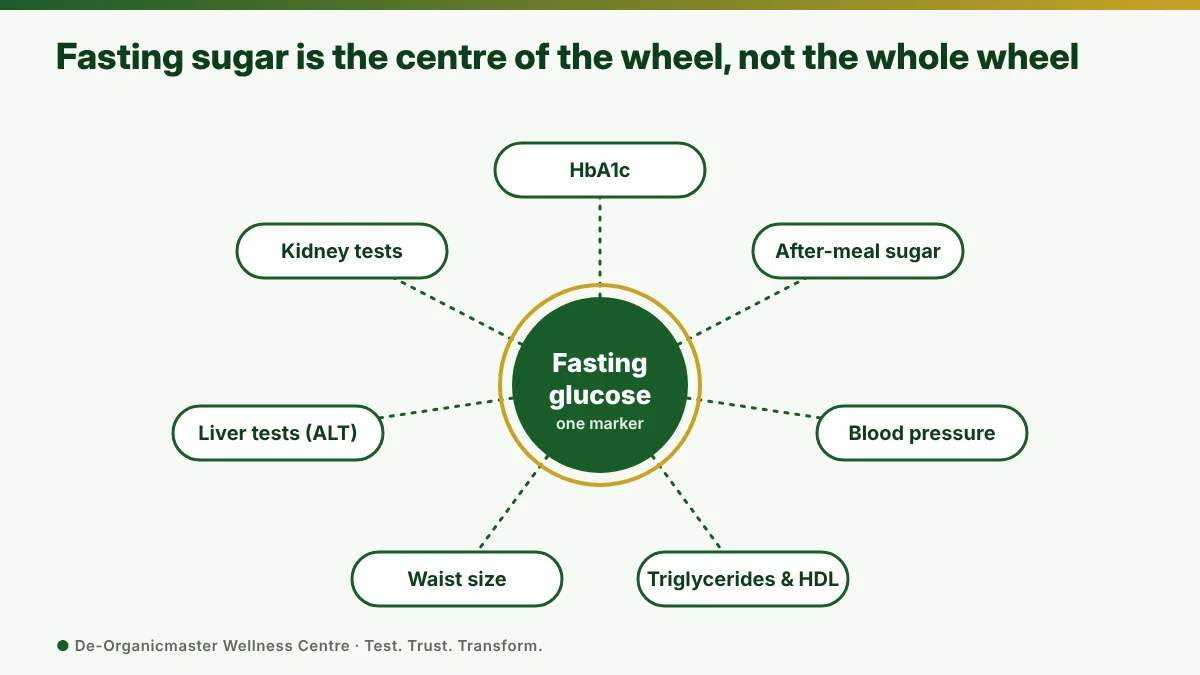
The markers that fill in the picture
- HbA1c. Shows your average sugar over roughly three months, so one bad or good day does not fool it. Note that it can read misleadingly in people with anaemia, recent blood loss, or an inherited haemoglobin variant such as sickle cell trait, which is common in Nigeria. If that applies to you, ask your doctor whether HbA1c is reliable in your case.
- After-meal glucose. Some people have a normal fasting reading but sugars that climb high after eating. A glucose tolerance test or home monitoring can reveal this.
- Blood pressure. High sugar and high blood pressure often travel together and both strain the heart and kidneys. Read more in what your blood pressure readings are telling you.
- Triglycerides and HDL cholesterol. High triglycerides with low HDL is a common pattern when the body is struggling with insulin.
- Waist size. Fat carried around the middle is more closely linked to insulin problems than weight alone.
- Liver tests. A fatty liver frequently sits alongside raised blood sugar, often without symptoms.
- Kidney tests. Creatinine and a urine albumin test can show early kidney strain long before you feel anything.
Why this matters in real life
Imagine two people with the same fasting sugar of 130 mg/dL. One has normal blood pressure, a healthy liver and clean kidney tests. The other has a blood pressure of 150/95, high triglycerides, and protein in the urine. The number is identical. The care they need is not. Looking only at the sugar would leave the second person under-treated.
Questions to take to your next appointment
- Besides my fasting sugar, which other tests should I have, and how often?
- What is my HbA1c, and is it reliable for me?
- When were my kidneys, liver, cholesterol and blood pressure last checked?
- What is my target for each number, and by when?
- Which food and activity changes would make the biggest difference for me?
The takeaway
Do not throw away your glucose meter or ignore your fasting result. Use it as one instrument on a dashboard. When you and your doctor look at sugar, pressure, fats, liver and kidney together, you can see the pattern, not just a point. That is the shift at the heart of our book: stop chasing single numbers and start understanding the system they come from.
Frequently asked questions
Is a fasting sugar of 100 to 125 mg/dL diabetes?
Not by itself. That range is usually called prediabetes. Diabetes is diagnosed from specific cut-offs (for example fasting glucose of 126 mg/dL or above, or HbA1c of 6.5% or above), normally confirmed on a repeat test. Your doctor will interpret your own results.
Should I test my sugar at home?
Home monitoring is useful for some people, especially those on treatment, and your doctor can tell you if and when to do it. If you test, keep a written log and bring it to your appointments.
Can I reverse high blood sugar with food alone?
Food, movement, sleep and weight changes can improve blood sugar significantly for many people, but how far depends on the person and the condition. Make changes alongside your doctor and do not stop prescribed medicine on your own.
This article is educational and does not replace advice from your doctor. Please do not stop or change any prescribed medicine without speaking to the person who prescribed it.